
Skip to content

Biodiversity Protection and Prevention

GRI 305-2

INTRODUCTION

Stakeholder Impact

Effective biodiversity protection and restoration practices support ecosystem preservation, sustainable resource use, and stakeholder confidence. Conversely, inadequate management, such as unsustainable land use, habitat disturbance, or non-compliance may lead to ecosystem degradation, regulatory risks, and reputational damage, potentially affecting operational continuity and stakeholder trust.

MANAGEMENT APPROACH

Policies & Commitments

  • Sustainability Policy
  • Enviromental and Climate Policy

Practices

Biodiversity Awareness Session

The Group recognizes biodiversity as an emerging priority due to its reliance on natural resources to support core operations. Healthy ecosystems are essential for operational continuity and long-term business resilience.

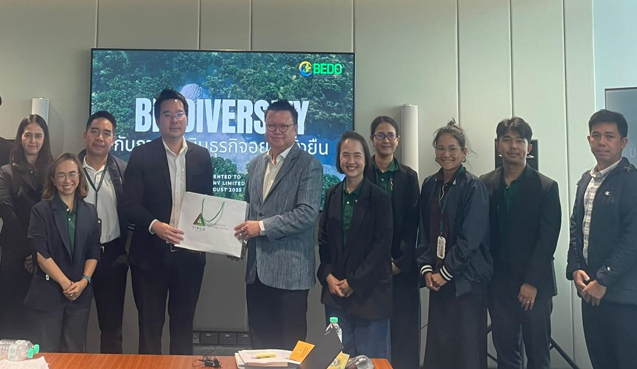
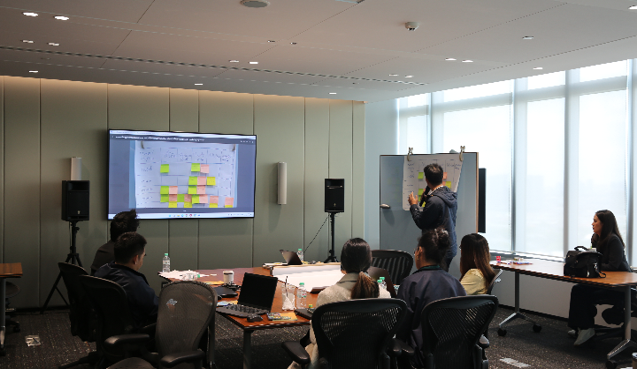
Given that this topic is relatively new, the Group is currently prioritizing awareness-building as a foundational step. Accordingly, the Group conducted a biodiversity awareness session held in August 2025, with support from  the Biodiversity-based Economy Development Office (Public Organization).

The session engaged representatives from asphalt plants in Thailand and the marine business, with a focus on understanding key environmental impacts and stakeholder expectations. This initiative marked an important first step in strengthening the Group’s understanding of biodiversity-related dependencies, impacts, and risks, thereby providing a foundation for the subsequent development of a structured biodiversity risk assessment.

Biodiversity Risk Assessment

The Group applies the LEAP approach (Locate, Evaluate, Assess, and Prepare) developed by the Taskforce on Nature-related Financial Disclosures (TNFD) to identify, assess, and manage nature-related risks and opportunities across its operations. This approach supports the integration of biodiversity considerations into risk management and strategic planning.

Our assessment links localized geographic data with asset-level environmental metrics through a dual-tool workflow, combining the Integrated Biodiversity Assessment Tool (IBAT) for location-based screening and the WWF Biodiversity Risk Filter (WWF BRF) for risk evaluation.

Locate

Under the Locate phase, the Group uses  the Integrated Biodiversity Assessment Tool (IBAT) to map proximity to Key Biodiversity Areas (KBAs) and Protected Areas (PAs). The scope of IBAT covers the locations of Group’s own operations and adjacent areas. 

Biodiversity Exposure & Assessment

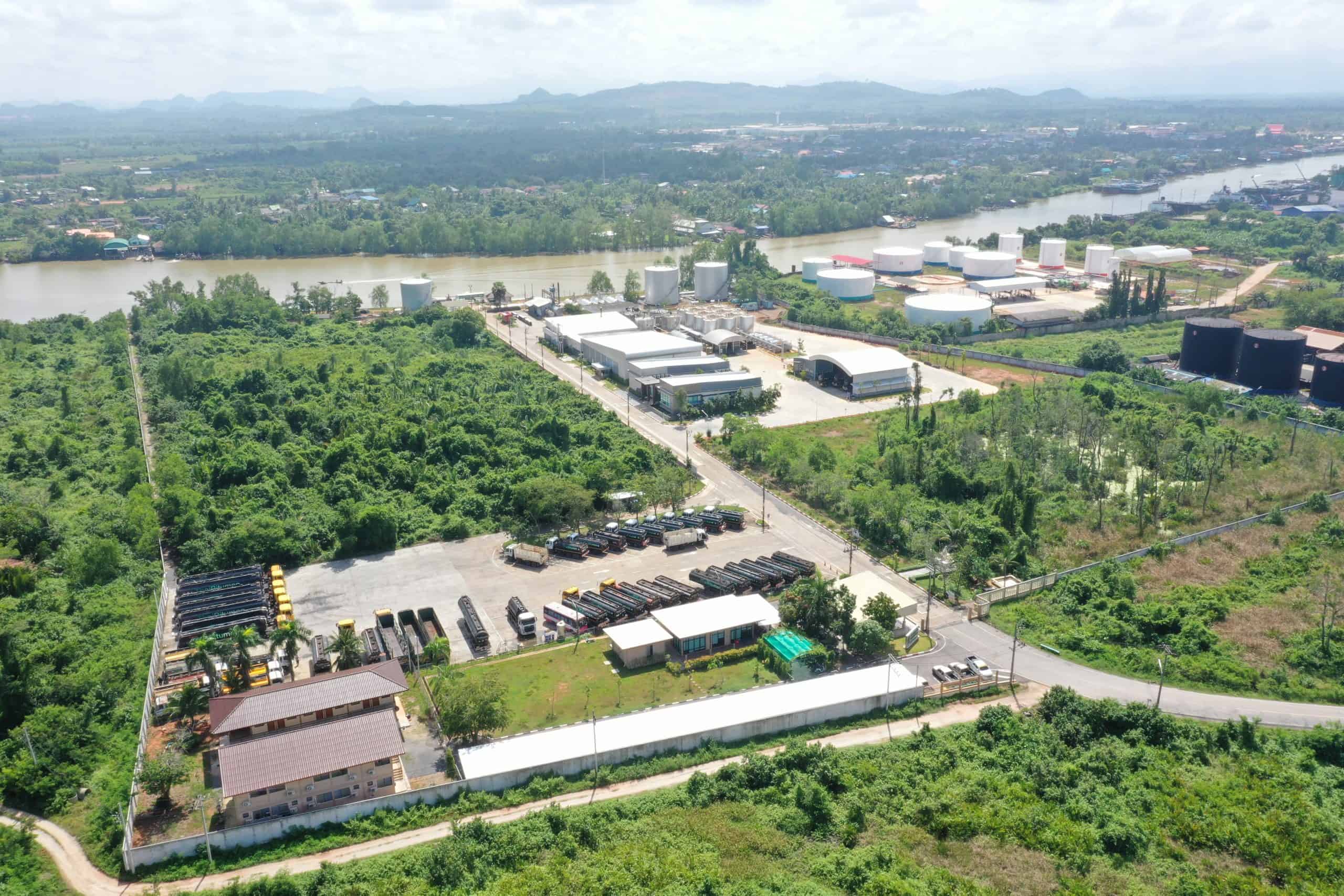
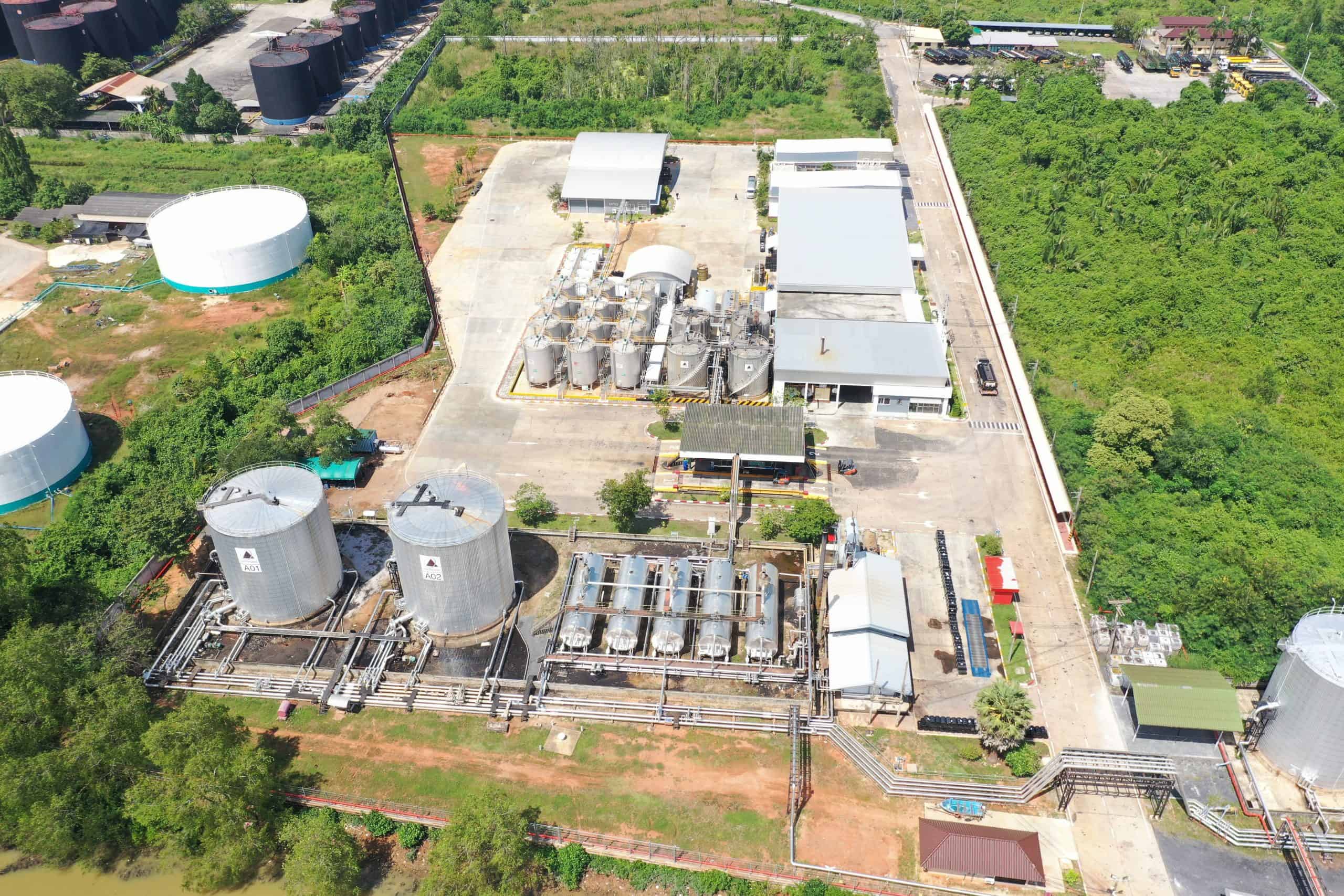
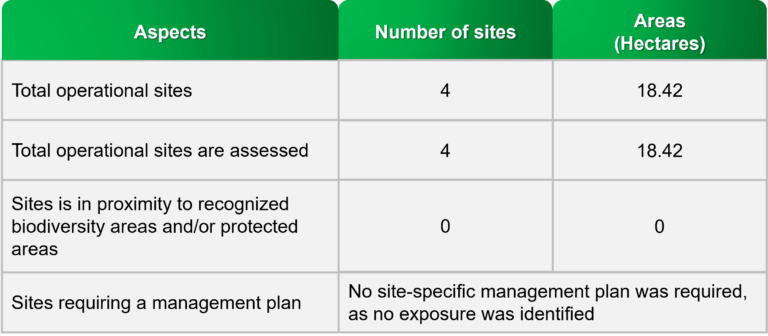
The Group’s own operations sites, comprising of 4 asphalt plants in Thailand, were screened with the internationally recognized areas and important biodiversity areas analysis from the Integrated Biodiversity Assessment Tool (IBAT). 

A risk rating was subsequently assigned to each site that overlaps with, or is in proximity to, internationally recognized areas and/or important biodiversity areas. The risk rating is based on each site’s relative distance to these areas.
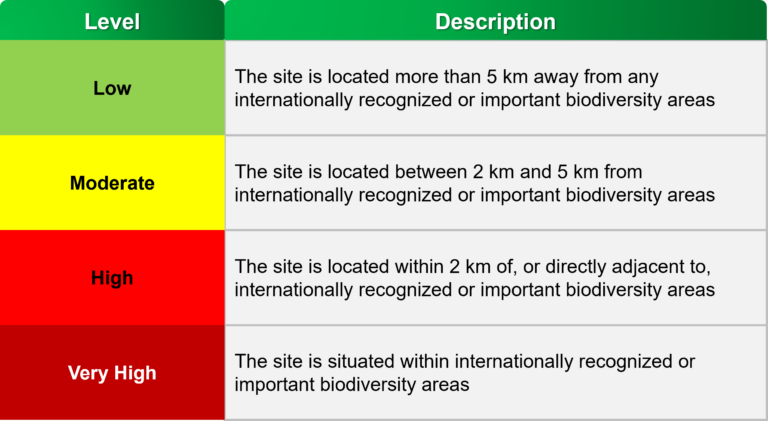
The results show that 4 asphalt plants  in Thailand are located more than 2 km away from internationally recognized Key Biodiversity Areas and/or Key Protected Areas. As all sites are located more than 2 km from recognized biodiversity areas and fall within low to moderate risk levels, no additional mitigation measures are required.
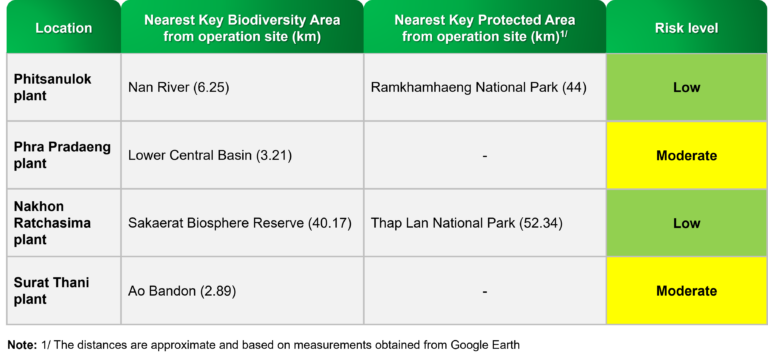
The result of the biodiversity assessment is illustrated in the table below:
Evaluate and Assess

The Group will assess the risk level of its locations by considering the relevant impacts and dependencies, using the WWF Biodiversity Risk Filter (WWF BRF)  as a reference for  biodiversity-related risks across  both physical and reputational dimensions.

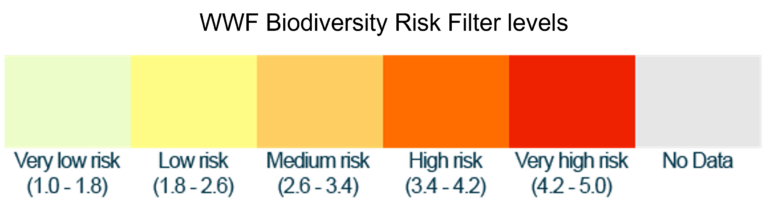
The WWF Biodiversity Risk Filter classifies risks into five levels — very low, low, medium, high, and very high — based on a standardized scoring range from 0.1 to 5.0, enabling consistent prioritization of biodiversity risks across locations.

The WWF Biodiversity Risk Filter results indicate that the plants’ locations are  exposed to biodiversity risks ranging from low to high levels, with only a limited number of indicators reaching the “very high” threshold (≥ 4.2) that require prioritized mitigation planning.

Applying the WWF risk classification criteria enables the Group to systematically prioritize actions, focusing mitigation efforts on indicators assessed as “very high”, while managing other risks through ongoing monitoring and general environmental management practices.

Prepare

In response to the WWF Biodiversity Risk Filter results, water availability and pollution have been identified as priority areas requiring mitigation, as they were classified as  “very high” risk indicators.

The Group’s approach is aligned with S&P Global’s mitigation hierarchy, focusing on avoidance, reduction, and transformation measures to manage both biodiversity-related impacts and dependencies.

  • Water availability: The Group has implemented a recycled water project, which helps avoid and reduce reliance on external water sources by improving water efficiency and resource circularity.
  • Pollution: Climate strategic projects and regular machinery maintenance play a vital role in reducing GHG emissions and controlling pollution in compliance with regulatory requirements, thereby contributing to the reduction of environmental pressures on surrounding ecosystems.