Locate
Under the Locate phase, the Group uses the Integrated Biodiversity Assessment Tool (IBAT) to map proximity to Key Biodiversity Areas (KBAs) and Protected Areas (PAs). The scope of IBAT covers the locations of Group’s own operations and adjacent areas.
Biodiversity Exposure & Assessment
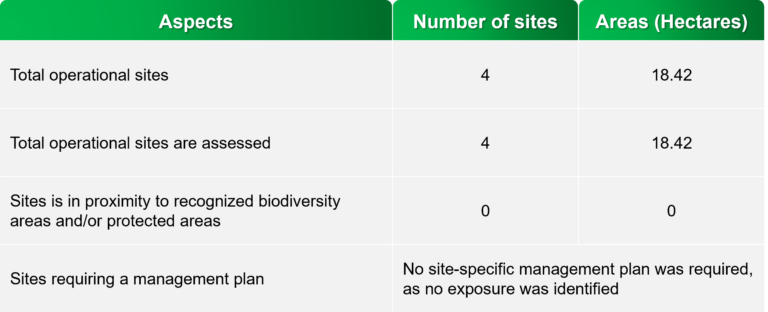
The Group’s own operations sites, comprising of 4 asphalt plants in Thailand, were screened with the internationally recognized areas and important biodiversity areas analysis from the Integrated Biodiversity Assessment Tool (IBAT).
A risk rating was subsequently assigned to each site that overlaps with, or is in proximity to, internationally recognized areas and/or important biodiversity areas. The risk rating is based on each site’s relative distance to these areas.
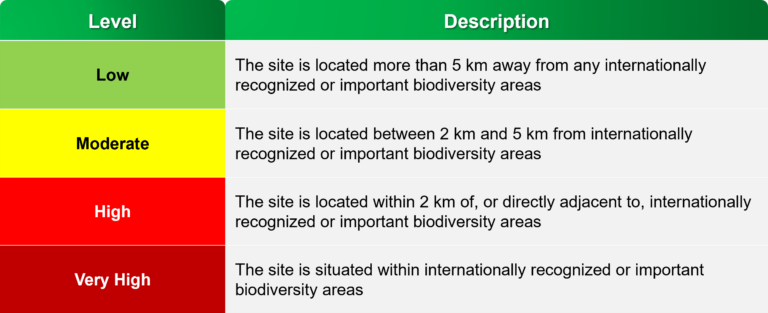
The results show that 4 asphalt plants in Thailand are located more than 2 km away from internationally recognized Key Biodiversity Areas and/or Key Protected Areas. As all sites are located more than 2 km from recognized biodiversity areas and fall within low to moderate risk levels, no additional mitigation measures are required.
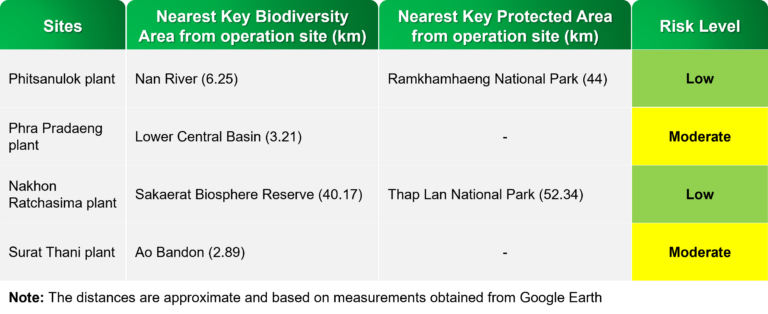
The result of the biodiversity assessment is illustrated in the table below:
Evaluate and Assess
The Group will assess the risk level of its locations by considering the relevant impacts and dependencies, using the WWF Biodiversity Risk Filter (WWF BRF) as a reference for biodiversity-related risks across both physical and reputational dimensions.
The WWF Biodiversity Risk Filter classifies risks into five levels — very low, low, medium, high, and very high — based on a standardized scoring range from 0.1 to 5.0, enabling consistent prioritization of biodiversity risks across locations.
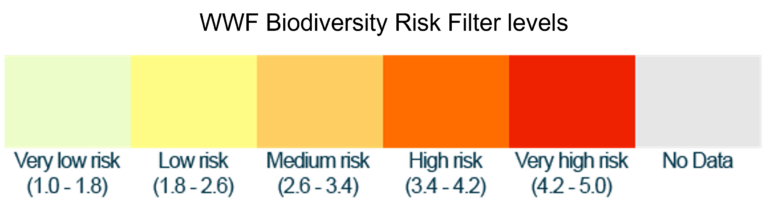
The WWF Biodiversity Risk Filter results indicate that the plants’ locations are exposed to biodiversity risks ranging from low to high levels, with only a limited number of indicators reaching the “very high” threshold (≥ 4.2) that require prioritized mitigation planning.
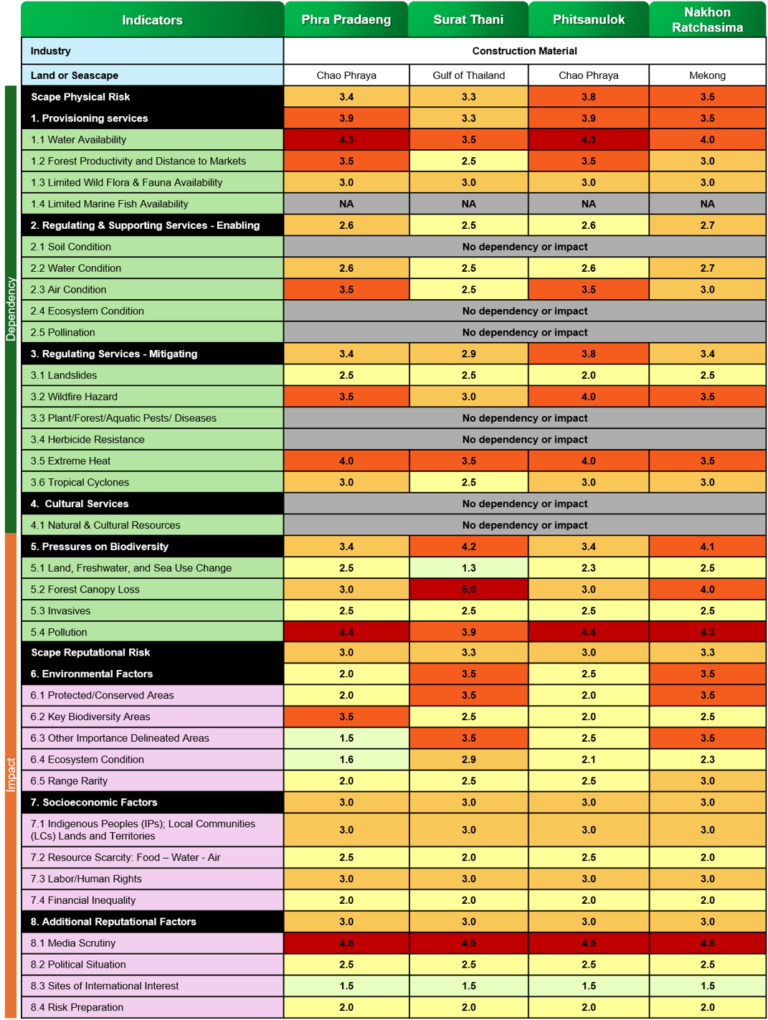
Applying the WWF risk classification criteria enables the Group to systematically prioritize actions, focusing mitigation efforts on indicators assessed as “very high”, while managing other risks through ongoing monitoring and general environmental management practices.
Prepare
In response to the WWF Biodiversity Risk Filter results, water availability and pollution have been identified as priority areas requiring mitigation, as they were classified as “very high” risk indicators.
The Group’s approach is aligned with S&P Global’s mitigation hierarchy, focusing on avoidance, reduction, and transformation measures to manage both biodiversity-related impacts and dependencies.
- Water availability: The Group has implemented a recycled water project, which helps avoid and reduce reliance on external water sources by improving water efficiency and resource circularity.
- Pollution: Climate strategic projects and regular machinery maintenance play a vital role in reducing GHG emissions and controlling pollution in compliance with regulatory requirements, thereby contributing to the reduction of environmental pressures on surrounding ecosystems.