Good Corporate Governance and Ethical Business Practices
Good Corporate Governance and Ethical Business Practices

INTRODUCTION
Stakeholder Impact
Strong corporate governance and ethical business practices including effective board oversight, adherence to business ethics, prudent tax strategy, and information security, are foundational to securing regulatory compliance and investor confidence. In contrast, failures in these control areas such as ethical misconduct, financial non-compliance, or data breaches can give rise to significant operational risks and threaten long-term stakeholder trust.
MANAGEMENT APPROACH
Policies & Commitments
Corporate Governance
Business Ethics
Tax Strategy
Information Security
Practices
Corporate Governance
The Group’s corporate governance is designed to ensure that business operations are conducted transparently, responsibly, and in the best interests of all shareholders, including minority shareholders.
A strong governance framework, enabled by effective checks and balances and clearly defined roles and responsibilities, enables the Board of Directors to provide oversight and strategic direction. This framework emphasizes Board of Directors’ independence, diversity, and experience, alongside accountability mechanisms and well-structured leadership.
Board Type & Composition
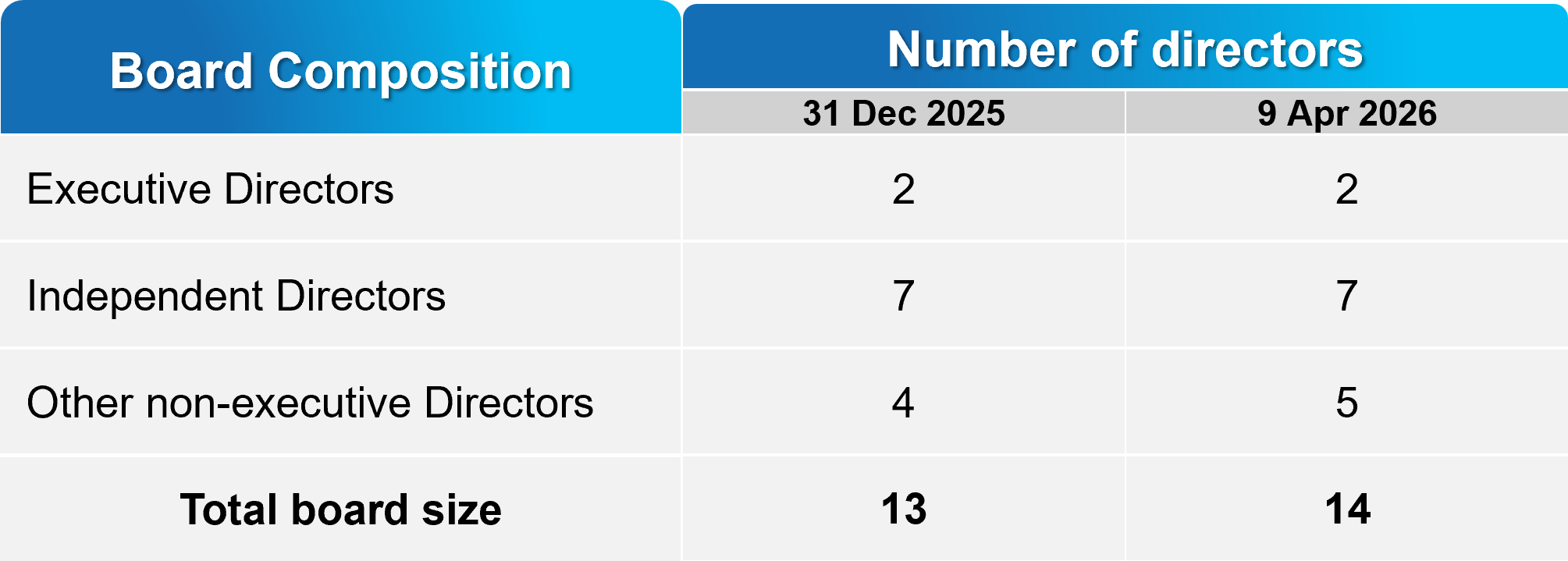
In accordance with the Public Limited Companies Act B.E. 2535, the Group operates under a one-tier board system consisting of executive, non-executive, and independent directors. The Group’s composition of the Board of Directors as of 31 December 2025 and as of 9 April 2026 are as follows:
Board Independence
The Group recognizes the critical role of independent directors, including an independent chairman, in safeguarding shareholders’ interests and ensuring objective decision-making. Independent directors are appointed in accordance with the definition prescribed by the Securities and Exchange Commission (SEC) of Thailand, ensuring no conflicts of interest and impartial oversight. Their presence strengthens independence, enhances transparency and accountability of the Group’s Board of Directors.
Board Diversity
The effectiveness of Board of Directors requires members with the appropriate blend of skills, experience, and independence. Diversity of Board of Director also enhances governance, by bringing broader perspectives, improving the quality of decision-making.
The Group has a Policy on Directors Qualifications and Nomination in place. The policy covers several aspects of diversity including gender, age, ethnicity, and nationality. The Group strives to increase the ratio of board gender diversity, by ensuring gender is one of a key consideration in the nomination process.
Board Accountability
An accountable Board of Directors is essential for effective corporate governance and alignment with shareholders. Key indicators of accountability include meeting attendance, external directorships, performance evaluations, and appropriate limitations on directors’ liability, while governance mechanisms such as annual director rotation, shareholder approval requirements, and CEO succession planning further safeguard long-term shareholder interests.
In 2025, the Board of Directors demonstrated strong governance practices, with an average meeting attendance rate of 93.67%. To ensure directors can effectively discharge their duties, directors may hold directorships in no more than five listed companies.
Directors’ liability is governed by applicable laws, under which directors are required to act in good faith and with due care, and are liable for damages arising from any breach of duties or applicable laws.
The Board of Directors’ effectiveness is further reinforced through annual performance evaluations conducted on both an individual and collective basis.
The Group also upholds shareholder rights through a robust governance framework, whereby one-third of directors retire by rotation at each Annual General Meeting of Shareholders and any agenda which is subject to shareholders’ approval will be considered and proposed to the shareholders by the Board of Directors. Finally, the Board has established a CEO succession plan to ensure leadership continuity.
Board Experience & Tenure
The composition of the Group Board of Directors reflects a balanced mix of industry expertise enabling both continuity and new perspectives in oversight. Directors’ industry experience enhances strategic guidance aligned with the Group’s core businesses.
In addition, the Group’s tenure of Board of Directors fosters a deeper understanding of operations, risks, and long-term value creation. Together, this combination strengthens the Board’s effectiveness in decision-making and governance.
The average tenure of the Board of Directors is 11.59 years. Among 14 directors, 7 independent or 5 non-executive members have practical work experience relevant to the Group’s businesses.
Remuneration
The Group’s approach to CEO remuneration focuses on aligning compensations with performance and sustainable value creation. The CEO’s performance is evaluated against defined financial and non-financial metrics:
- Key financial indicators include revenue, gross profit, EBITDA, and net profit margin; market share of Thailand and international subsidiaries; return on investment (ROI), return on assets (ROA), return on equity (ROE), and total shareholders’ returns.
- Key non-financial indicators include execution of Vision 2025, ESG performance, and the implementation of Enterprise Risk Management at international subsidiaries.
Ownership
Ownership structure is a fundamental aspect of corporate governance, highlighting the composition of management, government, and family ownership (major shareholders). Ownership stakes and specific ownership requirements for management enhance alignment with shareholder interests.
As of 31 December 2025, the Group’s ownerships were as follows:
- CEO and top executives held 3,000,000 shares and 471,000 shares in the Company, respectively, demonstrating their commitment to aligning management interests with long-term shareholder value creation.
- The Group’s government ownership represents less than 5% of total shareholding, indicating the Company’s operational independence.
- Founding individuals or family members do not hold more than 5% of the Company’s voting rights, as detailed in the Group’s e-One Report.
- As stipulated in the Articles of Association, each shareholder retains equal voting rights proportionate to their shareholding (one share accounts for one vote).
Governance Oversight
The Board of Directors retains overall responsibility for sustainability matters, supported by the Sustainable Development and Corporate Governance (SD&CG) Committee, which performs dedicated oversight on corporate governance and sustainable development-related matters.
At the executive level, responsibilities of sustainable development are assigned to a designated senior manager leading Corporate Sustainability Development Department. The senior manager reports directly to the CEO. This structure ensures clear accountability, effective implementation, and alignment of sustainability priorities with the strategic direction.
Business Ethics
Business ethics are foundational to a well-functioning organization. the Group embeds integrity across all business operations, through the implementation of Codes of Ethics (CoE), anti-corruption policy which covers anti-bribery, accessible whistleblowing mechanisms and transparent breach reporting processes. These measures strengthen stakeholders’ trust while ensuring that employees, business partners, and the broader public are effectively protected.
Code of Ethics
The Group’s CoE comprehensively covers corruption and bribery, discrimination, confidentiality, conflicts of interest, antitrust practices, financial misconduct (including money laundering and insider trading), and environmental, health and safety responsibilities. It is supported by formal whistleblowing mechanisms, ensuring accountability, transparency, and protection for all stakeholders.
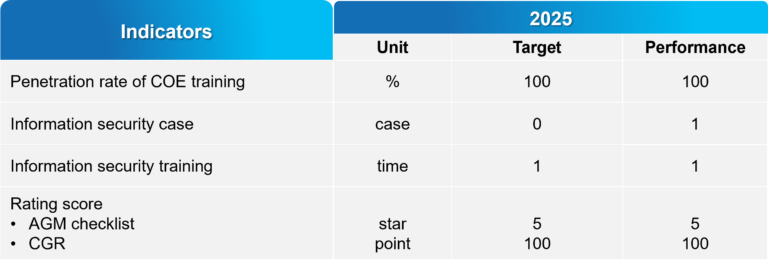
All stakeholders are expected to strictly adhere to the CoE. To this end, the Group mandates formal CoE training which requires employees’ digital acknowledgment of CoE through its internal system on annual basis. Also, the Group provides CoE information to new employees as part of their orientation programs.
Anti-Corruption Policy & Corruption Risk Assessment
The Group’s anti-corruption policy has approved by the Board of Directors, aimed at preventing corruption in all aspects of its operations and throughout the value chain, while also strengthening the credibility of its business.
Demonstrating its anti-corruption commitment in practice, the Group has received a certification from the Thailand Private Sector Collective Action Against Corruption (CAC) program. The Group’s anti-corruption practices goes beyond policies and guidelines to encompass governance oversight, risk assessment, internal controls, third-party due diligence, employee training, and whistleblowing mechanisms, as well as processes for monitoring, investigation, and continuous improvement. These measures ensure effective implementation of anti-corruption practices throughout operations.
As for risk assessment, the Group systematically conducts corruption risk assessments across its operations and intermediaries (e.g., business partners and suppliers). This process is executed by the Risk Management Office under the oversight of the Risk Management Committee, which develops the appropriate risk mitigation plans.
The Internal Audit function conducts independent audits on the execution of these anti-corruption controls and reports its findings directly to the Audit Committee on an annually basis.
Whistleblowing Machanism
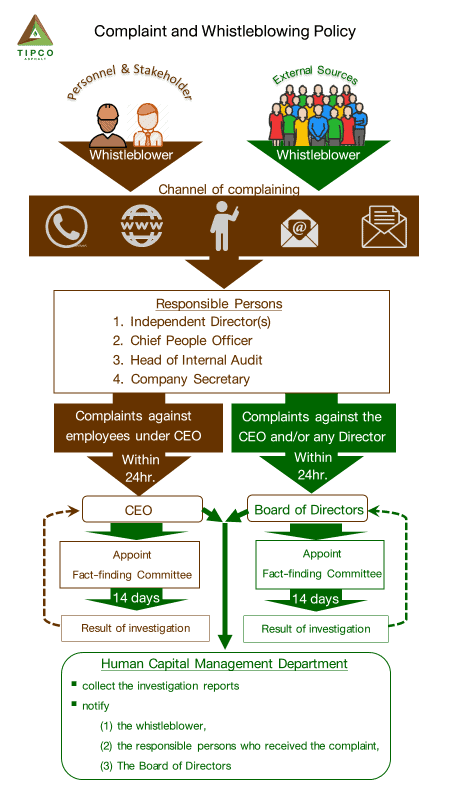
Whistleblowing mechanism plays key role in supporting implementation of CoE and anti-corruption policy. The Group maintains a secure, anonymous whistleblowing mechanism, enabling employees and external parties to report suspected misconduct, including bribery and corruption. Dedicated channels are established to receive complaints directly through designated personnel, specifically: Independent Directors, the Chief People Officer, the Head of Internal Audit, and the Company Secretary.
Upon receiving a possible credible whistleblowing report, a dedicated fact-finding committee is formed to execute a transparent, time-bound investigation. All reports are handled with strict confidentiality. The Human Capital Management Department oversees the collection of investigation reports and the formal notification to the whistleblower and the Board of Directors/Chief Executive Officer.
Tax Strategy
The Group commits to good corporate governance principles and transparent business conduct while serving as a good corporate citizen in line with sustainable development philosophy across economic, social, and environmental aspects. In this regard, the Group adheres to relevant rules and regulations, as well as the spirit and letter of the laws and regulations in the countries in which the Group operates.
Information Security
In light of increasing information security risks and their potential operational, financial, and reputational impacts, the Group has implemented a comprehensive framework, encompassing information security governance and operational program.
Information Security Governance
Cybersecurity is identified as a top corporate risk. At the executive level, the IT function reports directly to the CFO and proactively manages cybersecurity risks through regular assessments, mitigation plans, and quarterly reporting to the Risk Management Committee. These reports with CEO review consist of risk description, level, key risk indicator (KRI) and performance of respective KRI are subsequently presented to the Executive Committee and Board of Directors, ensuring strong governance and effective risk oversight.
To reinforce this governance framework, the Board of Directors has approved an IT security policy that emphasizes continuous improvement, data integrity and protection, monitoring and response to threats, clear assignment of responsibilities across the workforce, and information security requirements for third parties. This ensures a comprehensive and proactive approach to cybersecurity management.
Information Security Operational Programs
To operationalize its information security framework, the Company has implemented structured measures to ensure effective prevention, detection, and response to cybersecurity risks. Information security is integrated into business continuity planning to safeguard critical systems and data during disruptions.
The Group regularly conducts information security vulnerability analysis to identify and address weaknesses in its computer systems; monitors vulnerabilities or suspicious activities; process the reported incidents; and holds information security training sessions for employees. The Group has established the information security-related business continuity plan to verify an organization’s ability to recover critical data, applications, and operations using its backup site.
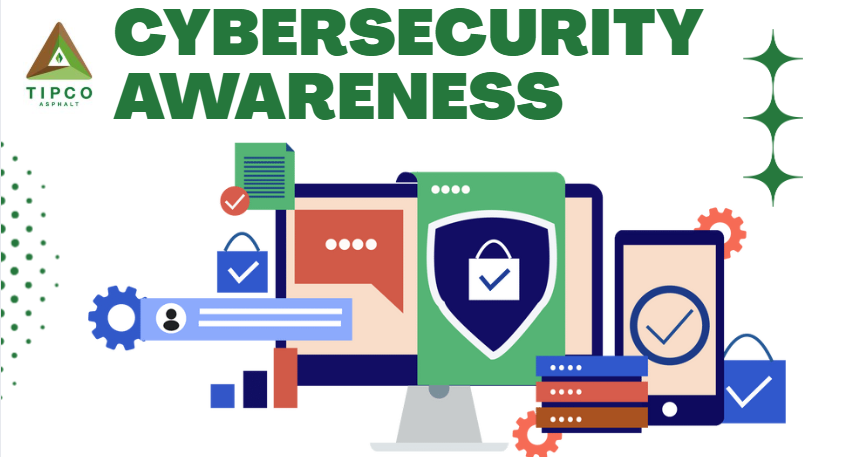
To enhance resilience, the Group provides ongoing information security training for employees, and conduct regular internal audits, to ensure compliance and drive continuous improvement. Additionally, certification under ISO/IEC 27001, demonstrates alignment with internationally recognized standards and provides independent external verification of the Group’s information security management system.
KEY PERFORMANCE
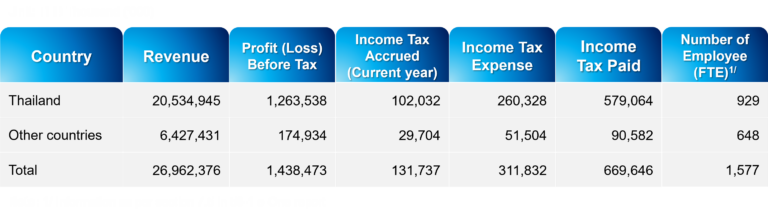
Tax Reporting
Implementing tax policies is the foundational step towards transparency and better governance. The list of countries that the Group has operated in 2025, along with key activities, revenue, profit (loss) before income tax, income tax accrued, income tax paid, and number of employees, are as follows:
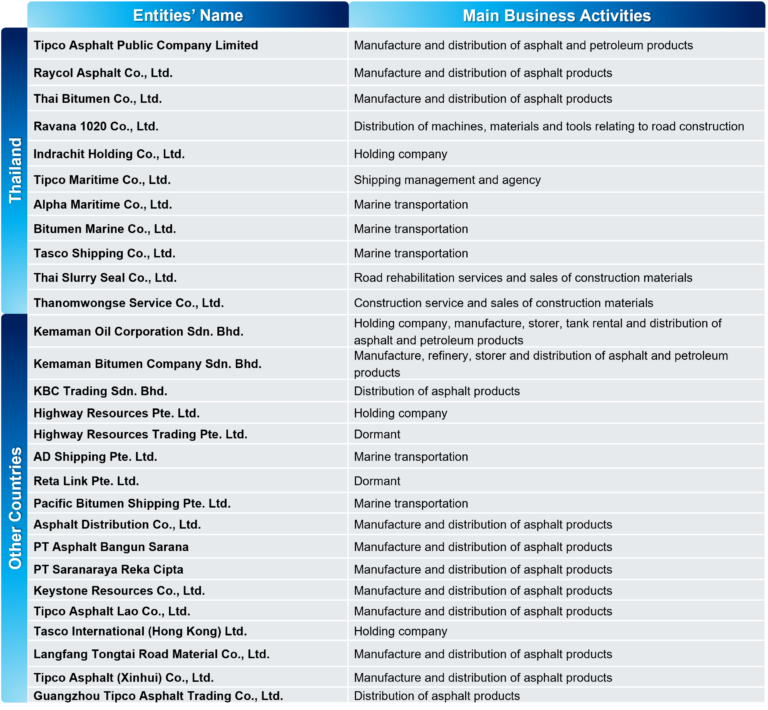
Entities and Business Activities by Locations
Effective Tax Rate
The corporate income tax rate for the Group ranges from 17% – 25%. In Thailand, the corporate income tax rate is 20%.
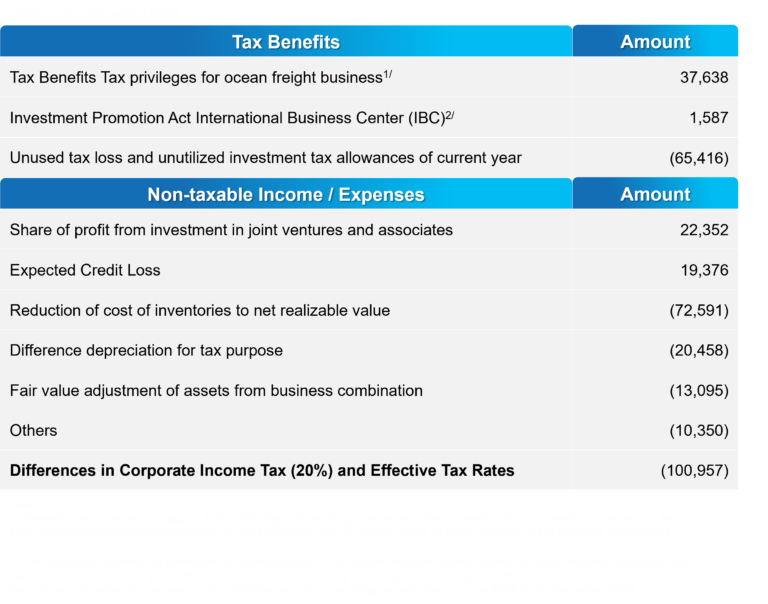
In the year 2025, the Group had a corporate income tax rate of 27% based on the consolidated financial statements and 14% based on the separate financial statements.
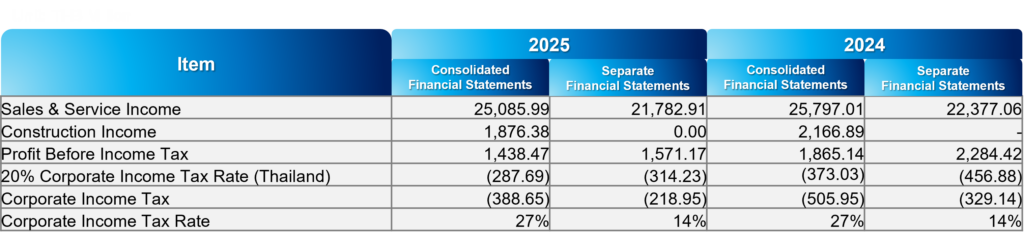
Explanation for Differences in Corporate Income Tax and Effective Tax Rates
The difference between the corporate income tax rate in Thailand (20%) and the effective tax rate is illustrated as follows:
HIGHLIGHT PROJECTS
Certification of the Collective Action Against Corruption
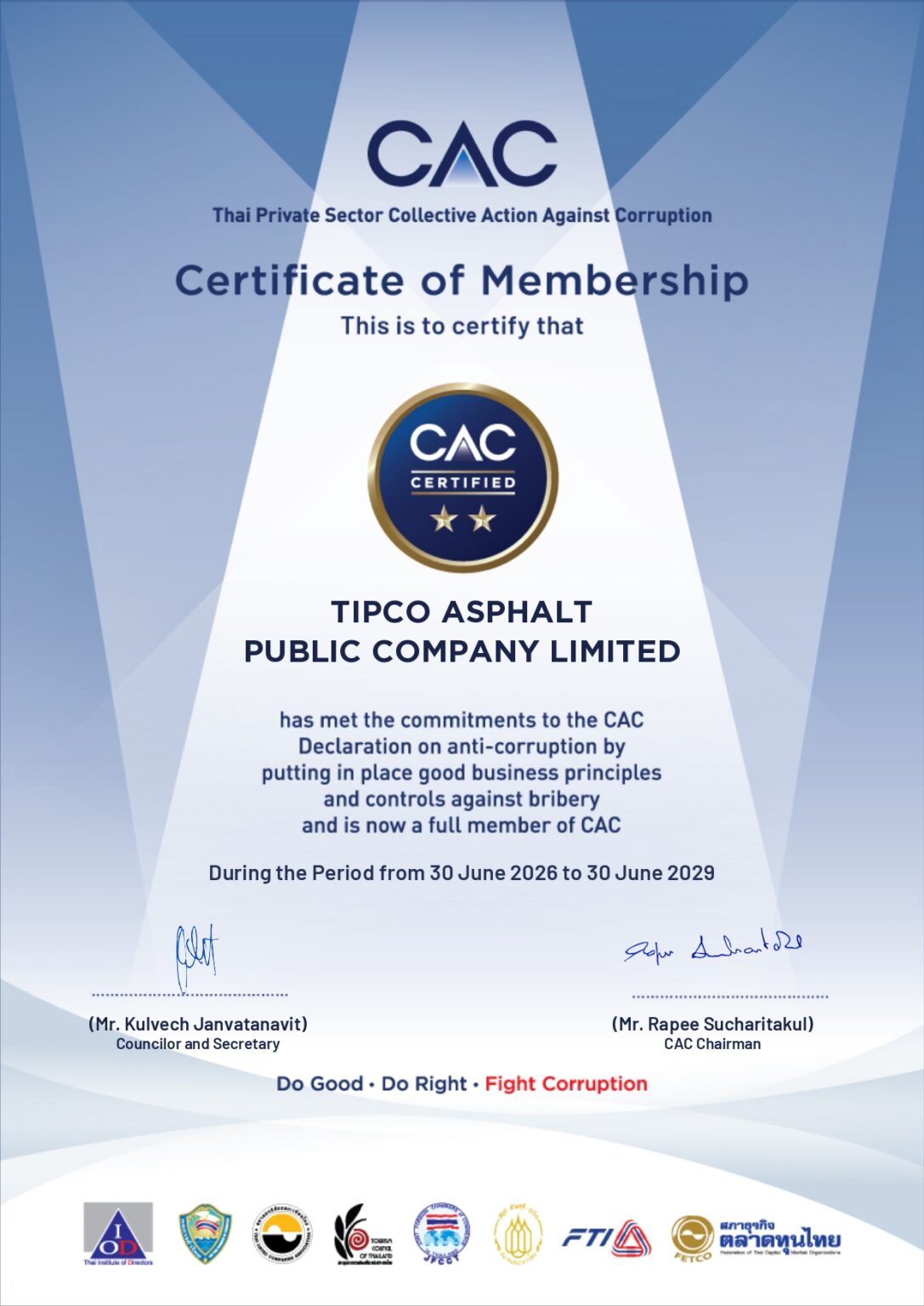
The renewal of the Company’s CAC certification reinforces its continued commitment to maintaining high standards of transparency, integrity, and anti-corruption practices. Beyond demonstrating compliance, CAC membership strengthens the Company’s ability to systematically identify, assess, and mitigate corruption risks through enhanced internal controls and governance mechanisms. The Company successfully completed its third recertification under the Thai Private Sector Collective Action Against Corruption (CAC). This achievement extends the certification validity through 2029.
Data Classification & Lebeling Technologies
To mitigate the risk of data breach, the Group has implemented data classification and labeling technologies. This scalable system safeguards data by ensuring that sensitive information is properly identified, classified, and labeled for secure handling, strict access control, and protection across all systems and applications.