Participation in Community and Society Development
Partipation in Community and Society Development
INTRODUCTION
Stakeholder Impact
Strategic community engagement helps gain trust between the Group and communities. Proactive engagement mitigates the risk of community-level disruptions, while targeted social investments—such as infrastructure support and capacity building—foster long-term relationships with local communities.
MANAGEMENT APPROACH
Policies & Commitments
Practices
While the Group’s primary focus remains on its core business operations, we are also committed to conducting business in a manner that benefits communities and society. To support this, the Group has maintained a CSR framework focusing on environmental, social, economic, and philanthropic pillars, and has established a local community engagement process to understand and address community needs, concerns and expectations, leading to fostering long-term relationships.
To facilitate comprehensive and effective engagement with local communities, the Group implements standardized stakeholder engagement programs across all local operations. The core practices include the following:
Conducting Community Impact Assessments
At all local operations, the Group identifies and prioritizes communities within a 5-kilometer operational radius, including the vulnerable groups, to proactively assess potential operational impacts and understand community needs.
Meeting to Identify Emerging Needs, Concerns, & Expectations
The Group has an engagement strategy that varies based on the level of operational impact on, and potential benefits for, specific local community groups, ensuring effectiveness in identifying and addressing their issues.
Establishing Communication Channels
The Group maintains structured communication channels, such as Open House events, drop boxes, local cultural activities, and the Group’s whistleblowing channel, to enable direct dialogue with local stakeholders. All community feedback and complaints are systematically tracked, managed, and addressed.
Building Capacity for Local Stakeholders
To strengthen meaningful relationships, the Group supports local communities through knowledge-sharing initiatives, such as safety training and product knowledge sharing.
Executing Regular Surveys
The Group executes annual stakeholder surveys and systematic evaluations, with reference to ISO 26000, to assess stakeholder perceptions, evaluate impact ratios, and continuously refine engagement strategies.
CSR Projects
The Group adopts a CSR-in-Process approach in developing and implementing CSR projects. This means that the Group integrates its expertise, products, and services into CSR projects, such as the Patching Potholes project, to address social or community needs while simultaneously creating business value opportunities.
In addition, when addressing urgent societal needs, the Group provides relief to local communities affected by natural disasters, such as floods. The Group also communicates these projects internally so employees can participate in and support these societal relief efforts.
KEY PERFORMANCE

HIGHLIGHT PROJECTS
Patching Potholes
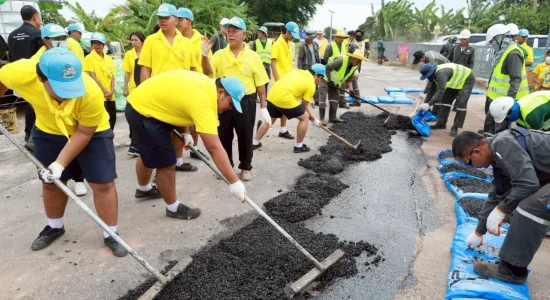
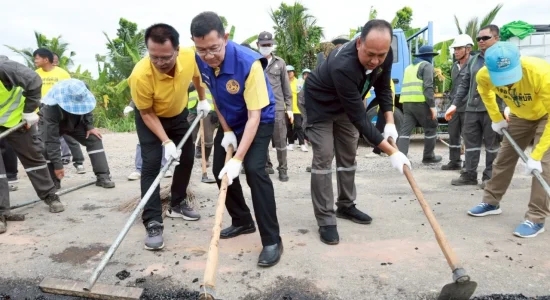
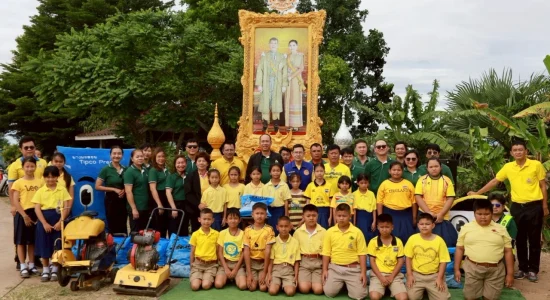
To alleviate travel hardships and reduce accident risks of local communities and road users, the Group’s employees and local community volunteers worked together to repair damaged roads using the Group’s product, TIPCO Premix. The collaborative effort took place in Nakhon Ratchasima and Surat Thani provinces, involving 84 employees and 156 community volunteers who contributed over 877 hours to apply 1,160 bags of TIPCO Premix.
Flood Volunteer Initiative
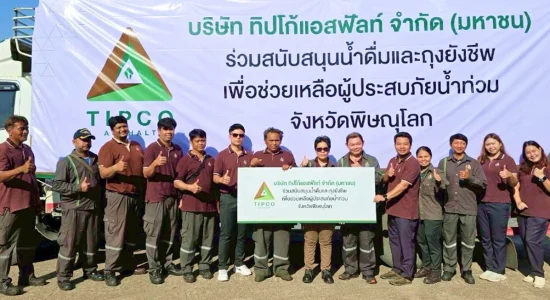
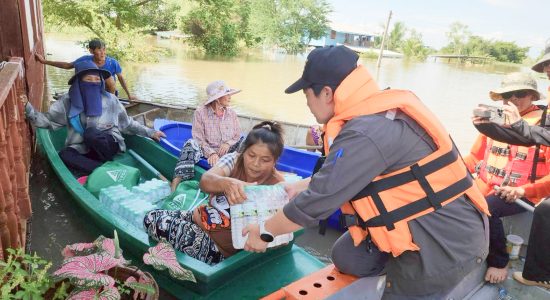
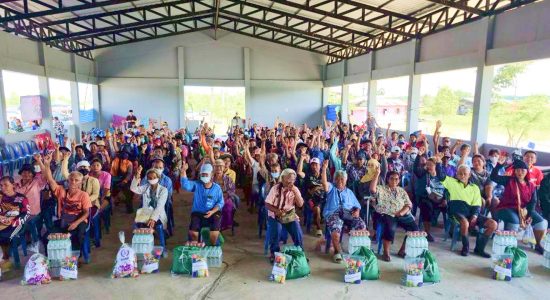
In response to urgent societal needs, the Group implemented the Flood Volunteer Initiative to provide immediate relief during severe weather events. In Phitsanulok Province, the Group collaborated with local government agencies and business partners to distribute drinking water, food, and emergency supply kits to over 250 households impacted by recurring seasonal flooding in the Ban Wang Kum Sub-district.
Mangrove Replanting and Seedling
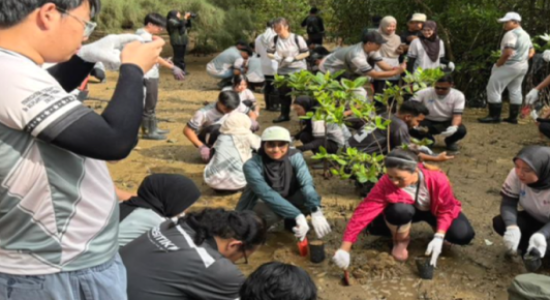
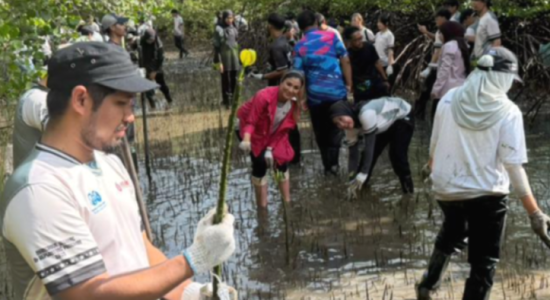
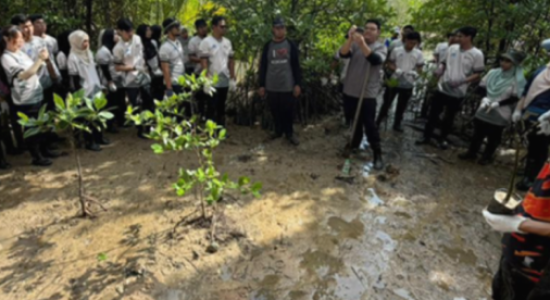
In alignment with the environmental dimension of the Group’s CSR framework, the Group’s refinery business in Malaysia, in partnership with Kemaman Emergency Mutual Aid (KEMA), Lembaga Pelabuhan Kemaman, and the Society of Petroleum Engineers, conducted the Mangrove Replanting and Seedling initiative. The participants of this initiative included the Group’s refinery employees, local authorities, and community members, who planted mangrove seedlings along the riverbanks. This initiative aimed not only to strengthen relationships with communities but also to address biodiversity issues in the local area. The initiative received 4.8 out of 5 satisfaction rates, reflecting a successful implementation of the planting activities.